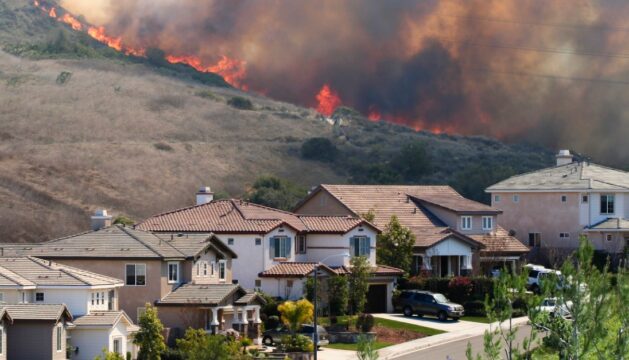
The record-breaking 2026 wildfire season is making homeowners insurance claims a more common challenge nationwide.
One of the biggest problems families can face after a wildfire is underinsurance. A 2021 study of homeowners affected by Colorado wildfires found that 74% of homeowners who filed insurance claims were underinsured, meaning their coverage was not enough to fully cover the cost of rebuilding.
This guide explains whether homeowners insurance covers wildfire damage, what it may and may not reimburse, and what families can do if their policies don’t fully cover their losses.
Does Homeowners Insurance Cover Wildfires?
Most homeowners insurance policies cover wildfire damage. If a wildfire damages your home, contact your insurance company and file a wildfire homeowners insurance claim.
Here’s what homeowners insurance for wildfires typically covers:
- Damage to your home (dwelling coverage): Pays to repair or rebuild the house and attached structures, up to the policy’s coverage limit.
- Debris removal: May cover the cost of removing fire-damaged materials, subject to your policy’s terms and limits.
- Personal belongings: Helps replace items such as furniture, clothing, and electronics destroyed or damaged by fire or smoke, subject to policy limits and exclusions.
- Smoke damage: May cover smoke-related damage to your home’s interior, furnishings, and other belongings.
- Temporary or additional living expenses (ALE): Helps pay for eligible hotel stays, rental housing, meals, and other necessary expenses if your home becomes unlivable.
- Other structures: Covers eligible damage to detached garages, sheds, fences, and other insured structures.
However, having a homeowners insurance wildfire policy does not necessarily mean your insurer will pay the entire cost of recovery. Your deductible, coverage limits, exclusions, and the policy’s replacement-cost provisions can all affect how much you ultimately receive.
If a wildfire damaged your home or property, you may have questions about covering remaining expenses. Our team can help you understand your legal options and connect you with support resources.
Reach out today to learn more.
What Homeowners Insurance Doesn’t Cover with Wildfires
Although homeowners insurance generally covers wildfire damage, certain losses may be excluded or only partially covered. Your insurer will review your policy’s exclusions, coverage limits, and deductible to determine how much it must pay.
Homeowners insurance may not cover:
- Flood damage: Standard homeowners insurance generally excludes flood damage, even if flooding occurs alongside a wildfire. Separate flood insurance may be needed.
- Uninsured or excluded property: Certain structures, belongings, or types of damage may fall outside your policy’s coverage or have lower limits.
- Costs above policy limits: If rebuilding your home costs more than your coverage allows, you may have to pay the difference unless additional coverage applies.
- Damage below your deductible: You generally must pay covered repair costs up to your deductible before the insurer pays.
- Damage to an unoccupied or vacant home: Some policies restrict coverage if a home has been vacant for a specified period, although the rules and exceptions vary.
- Losses without covered physical damage: Temporary relocation expenses may not qualify if your home is undamaged and you leave solely because officials issue an evacuation order, unless your policy provides specific coverage.
If your insurer denies a claim, ask for the specific policy language supporting the decision, and contact your state’s insurance department if you need help challenging it.
Why Does Standard Coverage Often Fall Short?
Standard coverage often falls short because rebuilding costs, local demand, personal property caps, and insurer decisions can push recovery costs past what a policy pays.
Factors that drive the gap between coverage and reality include:
- Coverage caps on personal property: Standard policies often cap personal belongings at a fraction of dwelling coverage, leaving victims short on furniture, appliances, clothing, and other lost items. It’s also important to know whether your policy pays replacement cost or actual cash value.
- Higher deductibles: Some policies require a separate or higher wildfire deductible. A June 2026 Stanford report found that average California homeowners insurance deductibles rose from $1,813 at the end of 2020 to $2,553 in March 2026.
- Policy non-renewals: Insurers have been dropping homeowners in high-risk areas at an accelerating pace. Washington state non-renewals nearly doubled between 2021 and 2026 due to wildfire concerns.
- Rising reconstruction costs and demand surges: Material and labor costs have increased significantly since many homeowners last reviewed their coverage limits, so policies set years ago may no longer reflect current rebuild costs. When an entire neighborhood burns, demand for local contractors, materials, and labor spikes, driving costs even higher.
If a wildfire damaged your home or property, you may have questions about what your insurance will and won’t cover. Contact us today to explore your legal options and get support.
Is Homeowners Insurance Different in Wildfire-Prone Areas?
Yes, homeowners insurance in wildfire areas generally works the same way as it does elsewhere, but getting and keeping coverage can be harder.
Homeowners insurance in fire-prone areas can involve:
- Higher premiums: A January 2025 U.S. Treasury report also found that homeowners in the 20% of ZIP codes with the highest expected losses from climate-related disasters like wildfires paid an average of $2,321 annually, 82% more than homeowners in the lowest-risk 20%.
- Limited availability: Some insurers stop offering new policies or decline to renew existing ones in high-risk areas, subject to state law and applicable protections.
- More restrictive coverage: Some insurers limit coverage or exclude wildfire damage, depending on state law and the policy.
- Home-hardening upgrades: Insurers may offer discounts or require risk-reduction measures, such as clearing vegetation near the home or using fire-resistant roofing materials.
- State-sponsored insurance options: Homeowners who can’t get coverage through traditional insurers may qualify for a state FAIR Plan or another insurer of last resort, although coverage may be more limited.
If you live in a wildfire-prone area, compare policy terms carefully rather than choosing based on price alone. Confirm that wildfire damage is covered, check that your dwelling limit is enough to rebuild, and ask about deductibles, exclusions, and additional living expenses.
How Wildfire Risk Can Affect Your Homeowners Insurance
Wildfire risk can affect whether you can get homeowners insurance, how much you pay, and how much coverage an insurer is willing to provide. Insurance companies consider the likelihood that a wildfire could reach a property and the potential cost of a claim.
Wildfire risk levels can affect insurance in different ways:
- Lower risk: Homeowners generally have more insurance options and may pay standard premiums, although wildfire coverage still depends on the policy.
- Moderate risk: Insurers may charge higher premiums or require homeowners to take steps to reduce fire hazards around the property.
- High risk: Homeowners insurance wildfire risk assessments in these areas can result in higher premiums, higher deductibles, stricter underwriting requirements, or fewer insurers willing to offer coverage. High wildfire risk homeowners insurance is often the hardest to find and the most expensive to keep.
- Severe or extreme risk: Private insurance may be difficult to obtain or renew. Homeowners may have to seek coverage through a state FAIR Plan or another insurer of last resort, which can provide less comprehensive coverage and cost more than standard insurance.
Risk isn’t determined solely by whether a home is located in a wildfire-prone state. Insurers may also consider the home’s specific location, construction, surrounding vegetation, proximity to fire protection, and local wildfire history.
As a result, two homes in the same community can receive different insurance rates or coverage options based on their individual risk profiles and how they prevent wildfires on their property.
What Should Wildfire Victims Do Before Accepting an Insurance Settlement?
Before accepting any settlement, document your losses, push back on the first offer, and consider getting independent help.
These steps can help you recover a fair settlement:
- Document everything before cleanup: Photographs, videos, and written inventories of all damage and losses are essential to supporting a full claim.
- Negotiate after getting the first offer: Initial settlement offers often underestimate rebuilding costs. Homeowners have the right to negotiate and to request an itemized explanation of how the payout was calculated.
- Hire a public adjuster or attorney if needed: A public adjuster works for the policyholder, not the insurance company, and can independently assess the full cost of losses.
- Ask for policy language if a claim is denied: Request the specific provisions supporting the decision, and contact your state’s insurance department if you need help challenging it.
- Know that insurance may not be your only option: When a wildfire is caused by negligence, such as utility equipment failure, improperly maintained power lines, or other preventable causes, affected homeowners may be able to file a wildfire lawsuit and recover losses that insurance does not cover.
Don’t let an insurance settlement be the end of the story. Taking steps to provide information and explore your options could help you cover your losses or rebuild with less financial stress.
Can You Recover Compensation in Addition to Homeowners Insurance?
Yes, in some cases. Homeowners whose property is damaged by a wildfire may have several potential sources of compensation, depending on the cause of the fire, their coverage, and whether another party may be legally responsible.
The scale of these losses can be substantial. The U.S. Fire Administration estimates that U.S. fires caused $19 billion in direct property loss in 2024, including an estimated $550 million from California wildfires.
Potential compensation options could include:
- Homeowners insurance claim: Insurance may pay for covered damage to the home, personal property, and additional living expenses.
- FAIR Plan or other state insurance: Homeowners who can’t obtain traditional insurance may have access to a state-sponsored insurer of last resort, although coverage may be more limited.
- FEMA disaster assistance: If a wildfire receives a federal disaster declaration, eligible survivors may qualify for federal assistance for certain uninsured or underinsured losses. FEMA assistance generally does not replace homeowners insurance.
- SBA disaster loans: Eligible homeowners may qualify for low-interest disaster loans to help repair or replace their primary residence and personal property.
- Wildfire lawsuit: When a wildfire is caused by negligence, victims may be entitled to pursue compensation beyond what their insurer provides, including for property damage and lost use of their home. This has been the case in some of the country’s largest wildfire settlements, including Pacific Gas and Electric’s $13.5 billion payout and PacifiCorp’s $575 million settlement.
These options can sometimes overlap, but there may not be much time to explore your options. Statutes of limitations, also called filing deadlines, prevent some people from filing their wildfire lawsuits. The deadlines range from 1 to 3 years, depending on the state.
Get your free case review now to understand your eligibility.
Get Clarity and Support After a Wildfire
A wildfire can leave your family facing far more than the immediate cost of repairing your home. Insurance disputes, rebuilding expenses, lost property, and temporary housing can make recovery even harder.
If another party may have caused or contributed to the wildfire, you may have legal options beyond an insurance claim, including a wildfire settlement from a responsible utility, company, property owner, or other party.
Call (866) 866-0753 or get a free case review to learn more about your legal options after a wildfire.