Wildfire Preparedness Guide for Seniors & Caregivers
Wildfires can develop quickly and may require immediate evacuation. For older adults, wildfire emergencies often present additional challenges, including mobility limitations, chronic medical conditions, and heightened sensitivity to smoke exposure. Caregivers and family members play a critical role in ensuring seniors are prepared.
Why Wildfires Pose Elevated Risk for Seniors
While wildfires are often associated with Western states, fire activity and smoke now affect communities across the country. Grassfires, forest fires, and prolonged smoke events have occurred in the Southeast, Midwest, Southwest, and parts of the Northeast in recent years.
Even communities hundreds of miles from an active fire can experience hazardous air quality. For seniors in suburban, rural, and wooded areas nationwide, wildfire preparedness is increasingly relevant.
Older adults may face increased vulnerability during wildfire emergencies due to:
- Chronic health conditions (heart disease or diabetes, for example)
- Cognitive conditions such as dementia
- Dependence on medications or medical equipment
- Greater sensitivity to smoke and poor air quality
- Reduced mobility or reliance on assistive devices
- Slower evacuation times
- Social isolation or living alone
These factors can make it harder for seniors to respond quickly to evacuation orders or protect themselves from smoke exposure.
Planning ahead, maintaining emergency supplies, and identifying evacuation support can help reduce risks and improve safety outcomes for older adults during wildfire events.
Preparing Before Wildfire Season
Preparation should begin well before wildfire season or visible smoke. Seniors and caregivers benefit from a written evacuation plan tailored to health needs, mobility, and living situations.
Advance planning provides more time to evacuate safely and reduces confusion during fast-changing emergencies. A personalized plan should include:
- A communication plan if phone or internet service is disrupted
- An out-of-area emergency contact
- Nearby accessible shelters or safe locations
- A transportation plan (who will drive and which vehicle)
- Backup transportation options
- Two or more evacuation routes in case roads are closed
The living environment also plays an important role in wildfire preparedness. Seniors living in independent housing may need to coordinate evacuation assistance with neighbors or family members.
Those in assisted living or senior housing communities should confirm that the facility maintains a clear wildfire evacuation protocol. Seniors living in rural or wooded areas may need to evacuate earlier, as emergency response times and access to transportation may be limited.
Practicing the evacuation plan periodically can help ensure everyone involved understands their role and can respond quickly during an emergency.
Medication and Health Care Continuity Planning
Wildfires, evacuations, and power outages can disrupt access to pharmacies, medical appointments, and essential home health care services. For seniors who rely on daily medications or medical equipment, even short interruptions can pose serious health risks.
Preparing in advance helps ensure continuity of care and reduces the likelihood of complications during an emergency.
Health care continuity planning should include:
- Discussing emergency refill procedures and transfer options with your pharmacy
- Keeping an updated list of medications, including dosages and prescribing physicians
- Maintaining at least a 7-14 day supply of prescription medications
- Preparing backup batteries or charging options for hearing aids, oxygen equipment, CPAP machines, and mobility devices
- Storing copies of medical records, insurance cards, and pharmacy contact information
Seniors who depend on electrically powered medical equipment should also consider registering with their local utility provider for medical priority restoration programs, where available.
These programs may provide advanced outage notifications or prioritize power restoration for medically vulnerable residents. Taking these steps ahead of wildfire season can help protect health and ensure uninterrupted access to essential care.
Build a Senior-Specific Emergency Go-Bag
A standard emergency kit may not fully address the medical, mobility, and comfort needs of older adults. Seniors may rely on medications, assistive devices, or specialized supplies that must be readily available during an evacuation.
Preparing a customized go-bag ahead of wildfire season can help ensure critical items are accessible if evacuation becomes necessary.
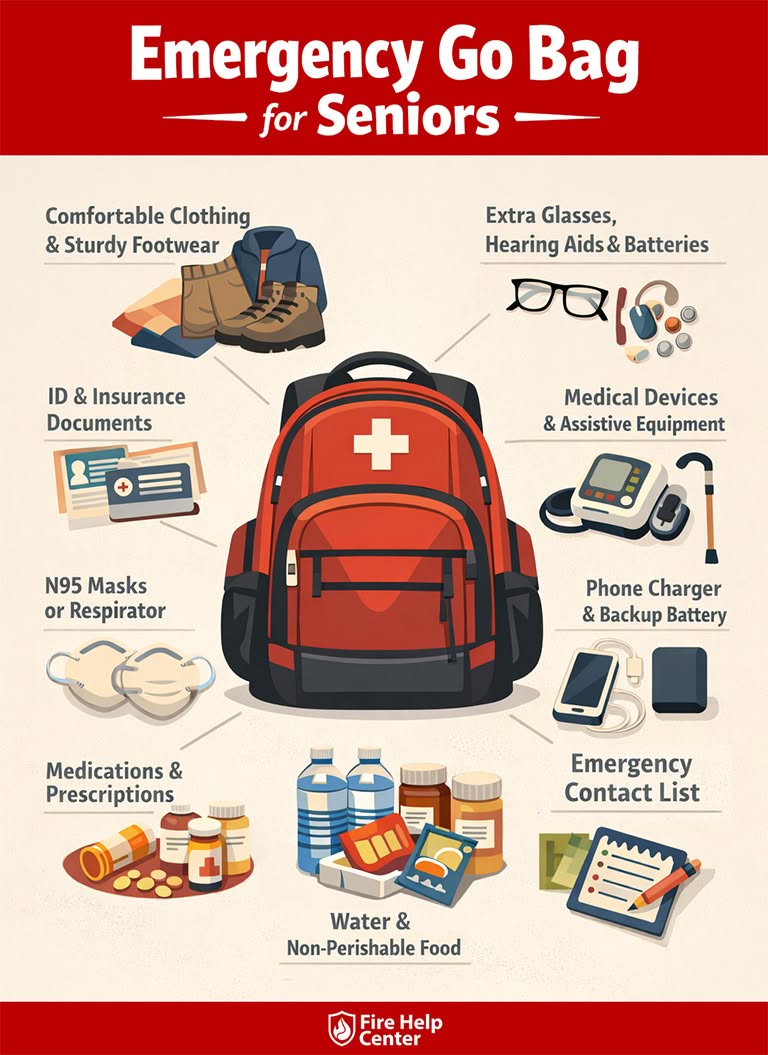
A senior-specific emergency go-bag should include:
- Comfortable clothing and sturdy footwear
- Extra glasses, hearing aids, and replacement batteries
- Identification and insurance documentation
- Medical devices and assistive equipment, if portable
- N95 masks or equivalent respiratory protection for smoke exposure
- Phone charger and backup battery pack
- Updated medication list and copies of prescriptions
- Water and easy-to-eat, nonperishable snacks
- Written emergency contact list
The go-bag should be stored in an easily accessible location, such as near an exit or mobility aid, so it can be retrieved quickly.
Caregivers and family members should review and update the contents regularly to ensure medications, contact information, and medical supplies remain current and ready for use during wildfire emergencies.
Smoke Safety for Seniors
Wildfire smoke contains fine particles (PM2.5) that can penetrate deep into the lungs and enter the bloodstream, worsening existing health conditions and increasing the risk of serious complications.
Older adults are especially vulnerable because aging lungs and cardiovascular systems are less able to tolerate air pollution.
Seniors exposed to wildfire smoke may face increased risk of:
- Fatigue, dizziness, or confusion
- Heart attack or stroke
- Reduced lung function and breathing difficulty
- Worsening symptoms of asthma or COPD
Reducing smoke exposure should be a priority both indoors and outdoors. When smoke levels are elevated, seniors should remain inside with windows and doors closed and use air conditioning or HVAC systems set to recirculation mode.
High-efficiency air filters and portable HEPA air purifiers can help improve indoor air quality, and designating a single “clean air room” may provide additional protection during prolonged smoke events. Monitoring the local Air Quality Index (AQI) can help families determine when it is safest to go outside.
If outdoor exposure is unavoidable, seniors should limit physical activity, avoid strenuous exertion, and wear properly fitted respirators if recommended by public health officials.
Symptoms such as chest pain, shortness of breath, confusion, or severe fatigue may indicate a serious health issue and should be evaluated by a medical professional as soon as possible.
Caregiver Responsibilities During an Evacuation
Caregivers play a critical role in ensuring seniors evacuate safely and maintain access to essential medical care. Wildfires can escalate quickly, leaving little time to gather supplies or coordinate transportation.
Acting early and following a clear evacuation plan can help reduce stress and prevent medical complications during the transition.
During an evacuation, caregivers should:
- Assist with mobility aids, assistive devices, and necessary medical equipment
- Bring medications, medical documentation, and identification
- Confirm the evacuation destination is accessible and appropriate for the senior’s medical needs
- Ensure safe entry into and exit from vehicles
- Leave early rather than waiting for mandatory evacuation orders if conditions worsen
- Provide calm, simple instructions and supervision for seniors with cognitive impairment
Caregivers should also carry a written summary of the senior’s medical conditions, medications, physicians, and emergency contacts. Having this information readily available can help ensure continuity of care if medical attention is needed during or after evacuation.
Preparing for Power Outages
Wildfires frequently cause planned power shutoffs, known as Public Safety Power Shutoffs (PSPS), as well as unexpected outages due to damaged infrastructure.
For seniors who rely on electrically powered medical devices, refrigeration for medications, or mobility equipment, even short-term power loss can create serious safety and health risks.
Power outage preparedness should include:
- Identifying alternative housing options with reliable electricity, such as a family member’s home or a facility with backup power
- Keeping a portable phone charger or power bank available, having backup batteries fully charged, and regularly testing them
- Knowing the operating duration and backup requirements for essential medical equipment
- Registering with your local utility provider for medical baseline or priority restoration programs, where available
- Storing flashlights in easily accessible locations throughout the home
- Maintaining a written list of emergency contacts in case communication systems fail
If a generator is used, it should always be operated outside and positioned far from doors, windows, and enclosed spaces to prevent carbon monoxide exposure.
Generators should never be used inside a home, garage, or enclosed area. Carbon monoxide detectors provide an additional layer of protection.
Addressing Cognitive and Emotional Health
Wildfire emergencies can be especially distressing for seniors, particularly those living with dementia, anxiety, or depression.
Evacuations, emergency alerts, smoke, and disrupted routines may increase confusion and fear. Planning ahead and providing consistent support can help reduce anxiety and improve safety.
Caregivers can support cognitive and emotional well-being by:
- Ensure identification bracelets, medical alerts, or contact cards are worn
- Keep familiar items nearby (glasses, hearing aids, photos, comfort objects)
- Maintaining familiar routines whenever possible
- Monitor closely for wandering during emergencies or evacuations
- Offer calm reassurance
- Use simple, clear communication
Seniors with cognitive impairment should never be left alone during an evacuation or smoke emergency. Caregivers may need to provide step-by-step guidance and use visual or written reminders to help reduce confusion.
After a wildfire or evacuation, seniors should be monitored for changes such as sleep disturbances, increased confusion, withdrawal, reduced appetite, anxiety, or agitation.
Emotional recovery may take time, and support from primary care providers, community resources, or mental health professionals can help seniors regain stability and a sense of safety.

After a Wildfire: Returning Home Safely
Returning home after a wildfire can present serious safety risks, even if the property appears undamaged. Structural weaknesses, utility hazards, and lingering smoke or ash may pose health threats, especially for older adults.
Seniors and caregivers should wait until local authorities confirm that reentry is safe and take precautions to reduce the risk of injury or exposure.
Before reentering the home, safety checks should include:
- Avoiding downed power lines or damaged electrical and utility equipment
- Checking for the smell of gas, such as a sulfur or “rotten egg” odor
- Confirming utilities are safe before restoring power, gas, or water
- Inspecting the structure for roof damage, foundation cracks, or unstable walls
- Watching for unstable debris, weakened trees, or loose fencing
Wildfire ash may contain toxic particles from burned building materials, plastics, and household chemicals. Seniors should avoid cleanup tasks whenever possible, as these activities can increase fall risk and exposure to harmful particles.
If limited cleanup is necessary, wearing gloves, protective clothing, and properly fitted respiratory protection can help reduce exposure. Dry sweeping should be avoided, as it can release ash into the air.
Get Help and Stay Informed
Wildfires can create rapidly changing conditions, and seniors and caregivers may need additional support before, during, and after an emergency. Staying informed and accessing trusted resources can help improve safety and ensure timely assistance.
Local emergency management agencies, public health departments, and utility providers often offer alerts, evacuation guidance, and support programs for medically vulnerable residents.
The Fire Help Center provides information to help families understand wildfire risks, prepare in advance, and identify available support options. Contact us now to see if we may be able to help you.

Written by: Fire Help Center
Fire Help Center was founded to support individuals and families affected by wildfire-related loss and disaster. Our mission is to provide clear, reliable resources that help people navigate recovery, prevention, and preparedness strategies. We work to ensure no one has to face the aftermath of a wildfire alone.
- American Red Cross. (n.d.). “Emergency preparedness planning, evacuation guidance, and disaster safety resources.” Retrieved from: https://www.redcross.org/
- Centers for Disease Control and Prevention (CDC). (n.d.). “Wildfire smoke health risks, vulnerable populations guidance, and protective measures.” Retrieved from: https://www.cdc.gov/wildfires/
- Environmental Protection Agency (EPA). (n.d.). “Air Quality Index (AQI) guidance and wildfire smoke exposure recommendations.” Retrieved from: https://www.airnow.gov/
- Federal Emergency Management Agency (FEMA). (n.d.). “Disaster planning, evacuation guidance, emergency supply recommendations, and disaster assistance programs.” Retrieved from: https://www.fema.gov/
- Federal Emergency Management Agency (FEMA). (n.d.). “Wildfire preparedness and evacuation planning guidance.” Retrieved from: https://www.ready.gov/wildfires
- Federal Emergency Management Agency (FEMA). (n.d.). “Power outage preparedness and emergency planning guidance for medically dependent individuals.” Retrieved from: https://www.ready.gov/power-outages
- Federal Emergency Management Agency (FEMA). (n.d.). “Disaster recovery programs, housing assistance, and disaster relief services.” Retrieved from: https://www.disasterassistance.gov/
- National Institute on Aging (NIA). (n.d.). “Emergency preparedness guidance for older adults and caregivers.” Retrieved from: https://www.nia.nih.gov/
- Sokolove Law. “Wildfire Lawsuit.” Retrieved from: https://www.sokolovelaw.com/personal-injury/wildfire/
- U.S. Fire Administration (USFA). (n.d.). “Wildland-urban interface preparedness, evacuation planning, and wildfire safety guidance.” Retrieved from: https://www.usfa.fema.gov/