Do not delay to gather more belongings—waiting can increase the risk of injury or blocked escape routes.
Wildfire Preparedness Guide: Safety Before, During, and After
Wildfires can spread rapidly, disrupt communities with little warning, and impact air quality hundreds of miles away. Preparing before wildfire season reduces risk, protects your household, and improves your ability to evacuate safely if needed.
This guide covers what to do before, during, and after a wildfire, including evacuation planning, smoke safety, and recovery considerations.

Understanding Wildfire Risk in the United States
Wildfires are often associated with states in the western part of the United States, but wildfire risk now affects communities across the country. Large wildfire incidents occur in nearly every region of the U.S. each year, including the Southeast, Midwest, Southwest, and parts of the Northeast, according to the National Interagency Fire Center.
Today, wildfire risk is not limited to mountainous terrain or remote forests. Suburban neighborhoods, rural communities, and even coastal areas can face wildfire threats under the right conditions.
Wildfire Risk Is Expanding Beyond the West
While states like California, Oregon, and Colorado regularly experience large fire seasons, other regions are also seeing increasing wildfire activity:
- Southeast: States such as Florida, Georgia, and the Carolinas frequently experience wildfires during dry spring months.
- Southwest & Plains: Texas, Oklahoma, and Kansas are vulnerable to grassfires driven by wind and drought.
- Midwest: States like Minnesota and Wisconsin experience forest fires during dry periods.
- Northeast: Maine and parts of New York and New England face wildfire risks during prolonged dry conditions.
Drought, higher temperatures, invasive vegetation, and shifting weather patterns contribute to elevated wildfire potential in multiple regions.
The National Weather Service issues Red Flag Warnings nationwide when conditions such as low humidity, strong winds, and dry fuels create a high risk of fire ignition and spread.
Wildfire preparedness is now relevant in all 50 states, especially for communities located near wooded areas, grasslands, or undeveloped land.
How Wildfires Start
Wildfires can begin naturally or through human activity. While lightning has historically been a major cause, human-caused ignitions now account for the majority of wildfires in the United States.
Understanding how fires start is critical to prevention, accountability, and protecting communities from devastating losses.
Natural Causes
Natural forces can ignite fires without human involvement, particularly in areas experiencing drought, extreme heat, or dry vegetation.
Common natural wildfire causes include:
- Dry thunderstorms: These storms produce lightning but little or no rain. Without moisture to suppress sparks, lightning can easily ignite dry vegetation.
- Lightning strikes: Lightning is the most significant natural ignition source. When lightning strikes dry trees, grass, or forest debris, it can create smoldering embers that quickly spread into larger fires.
- Spontaneous combustion: Under certain conditions, organic materials like mulch, compost, or hay can generate heat and ignite without an external spark.
- Volcanic activity: Though rare in the United States, lava flows and volcanic heat can ignite nearby plant life.
These naturally caused fires are part of some ecosystems, but prolonged drought and rising temperatures have made them more destructive and difficult to control.
Human Causes
Human activity causes many wildfires each year—often during routine, preventable activities.
Common human-caused wildfire sources include:
- Unattended campfires: Embers can reignite if not fully extinguished.
- Debris burning: Leaves or yard waste can quickly spread, especially in wind.
- Discarded cigarettes: Lit cigarettes can ignite dry ground or vegetation.
- Power lines: Downed or damaged lines can spark fires.
- Equipment use: Tools like mowers or chainsaws can create sparks in dry conditions.
- Utility failures: Faulty infrastructure can ignite fires, especially in high winds.
- Vehicle sparks: Dragging chains or hot parts can ignite roadside brush.
Wildfires often start during everyday activities and spread quickly in hot, dry, and windy conditions. Preventing human-caused ignitions remains one of the most effective ways to reduce wildfire risk.
How Wildfires Spread
Once ignited, wildfire behavior is influenced by three primary factors: weather, fuel, and topography. These elements interact in complex ways to determine how quickly a fire grows, how far it travels, and how difficult it is to control.
Even small fires can rapidly become large-scale disasters when conditions allow flames and embers to spread beyond the original ignition point.
Weather Conditions
Weather is one of the most important factors affecting wildfire spread and intensity. Certain conditions can cause fires to grow rapidly and behave unpredictably.
Key weather-related factors include:
- Drought conditions: Extended periods without rain create large amounts of dry, combustible vegetation, increasing the likelihood and severity of wildfires.
- High temperatures: Heat dries out fuel sources and allows fires to ignite and spread more quickly.
- Low humidity: Dry air removes moisture from vegetation, making plants, grass, and trees more flammable and easier to ignite.
- Strong winds: Wind supplies oxygen to the fire, increases flame intensity, and pushes flames into new fuel sources. Wind can also carry burning embers called firebrands over long distances, igniting new fires far ahead of the main fire line.
Wind-driven embers are especially dangerous because they can travel over roads, rivers, and firebreaks, igniting homes, roofs, and landscaping far from the original fire. This phenomenon is a major reason why wildfires can quickly spread into residential neighborhoods.
Fuel Sources
Wildfires require fuel to grow and spread. Fuel refers to any combustible material that can ignite and sustain flames. The type, amount, and arrangement of fuel significantly influence wildfire intensity and speed.
Common wildfire fuel sources include:
- Dry grass and weeds: These ignite easily and allow fires to spread rapidly across large areas.
- Forest undergrowth: Dense vegetation beneath trees allows fires to climb from the ground into the forest canopy.
- Landscaping near structures: Shrubs, mulch, and plants located close to homes can act as pathways for fire to reach buildings.
- Leaves and brush: Accumulated vegetation acts as kindling, helping fires grow and intensify.
- Roofing and building materials: Certain materials, especially untreated wood or older roofing, are more vulnerable to ignition.
Trees and fallen branches: Larger fuel sources sustain longer, hotter fires. - Wooden structures: Decks, fences, sheds, and homes can ignite when exposed to flames or embers.
Communities located near forests, grasslands, or undeveloped land, often called the wildland-urban interface, face increased wildfire risk because structures are located close to natural fuel sources.
Terrain
The shape and features of the land also play a major role in wildfire spread. Fires do not move evenly across all surfaces. Instead, terrain can accelerate or intensify fire behavior.
Important terrain-related factors include:
- Canyons and valleys: These areas can funnel wind, increasing fire speed and intensity.
- Natural corridors: Features such as ravines or dry riverbeds can direct fire toward populated areas.
- Steep terrain: Steeper slopes allow flames to spread more quickly and burn more intensely.
- Uphill slopes: Fires move faster uphill because heat rises, preheating vegetation above the flames and making it easier to ignite.
Even relatively small fires can spread quickly across flat terrain when winds are strong and vegetation is dry. For this reason, wildfire risk is not limited to mountainous regions.
Grassfires and brushfires can spread rapidly in plains, suburban areas, and regions not traditionally associated with wildfires.
Preparing Before a Wildfire
Wildfire preparation should begin well before fire season. Taking proactive steps can reduce the risk of injury, improve evacuation safety, and help protect property.
Because wildfires can spread quickly and change direction without warning, early planning is essential for households in both high-risk and moderate-risk areas.
Emergency responders often have limited time to notify residents, which means families must be ready to evacuate immediately when conditions worsen.
Create a Wildfire Evacuation Plan
Every household should have a written wildfire evacuation plan. Planning ahead helps ensure that all family members understand what to do and where to go during an emergency.
A complete evacuation plan should include:
- At least two evacuation routes: Fires can block roads without warning, so identifying multiple exit options improves the chances of evacuating safely.
- A designated out-of-area emergency contact: Choose someone outside your immediate area who can serve as a central point of communication if family members become separated.
- A family meeting location: Establish a safe meeting place away from the wildfire zone where everyone can reunite.
- Plans for pets and livestock: Identify pet-friendly evacuation shelters, boarding facilities, or locations where animals can be safely transported.
- Practice evacuation drills: Practicing evacuation procedures helps family members react quickly and calmly during real emergencies.
- Transportation arrangements: Ensure vehicles are maintained, fueled, and ready for evacuation. Households without reliable transportation should coordinate with neighbors, family members, or local emergency services.
Do not rely on a single evacuation route. Roads can close quickly due to fire, smoke, fallen debris, or emergency response activity. Having multiple evacuation options can significantly improve safety.
Build a Wildfire Emergency Go Bag
An emergency kit, often called a “go bag,” allows families to evacuate quickly without scrambling to gather essential items.
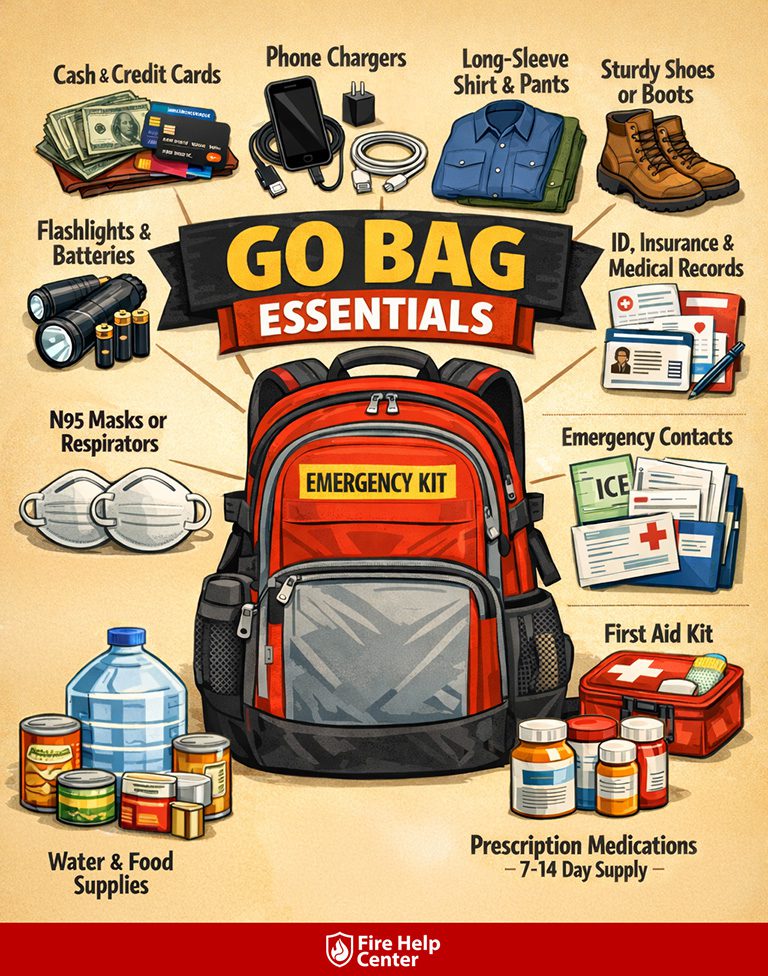
Important items to include:
- Cash and credit cards
- Cell phone chargers
- Clothing, including long-sleeved shirts and long pants, to protect against heat
- Closed-toe shoes or boots suitable for walking outdoors
- Emergency contact information
- Flashlights and batteries
- First aid supplies
- Identification, insurance policies, and medical records
- N95 masks or respirators to help reduce smoke inhalation
- Prescription medications and medical supplies (7-14 day supply)
- Water (at least 1 gallon per person) and nonperishable food for at least 3 days
Keeping emergency supplies accessible can save valuable time when evacuation orders are issued.
Create Defensible Space Around Your Home
Defensible space is the buffer between your home and nearby vegetation that helps slow or stop the spread of wildfire. Properly maintained defensible space can significantly reduce the likelihood that flames or airborne embers will ignite your home.
Wildfire safety experts commonly divide defensible space into three zones based on distance from the home.
Zone 0: Immediate Zone (0-5 Feet From the Home)
This is the most critical area for wildfire prevention. Because embers can ignite materials close to the structure, the immediate zone should be as fire-resistant as possible.
Recommended steps include:
- Avoid placing combustible materials such as patio furniture, door mats, or storage containers near exterior walls
- Clear leaves, pine needles, and debris from gutters, roofs, and decks
- Remove mulch, dry leaves, and flammable landscaping materials
- Store firewood, propane tanks, and other flammable materials away from structures
- Use noncombustible materials such as gravel, stone, or concrete near the home’s foundation
Maintaining this zone reduces the risk of embers igniting materials directly next to the home.
Zone 1: Intermediate Zone (5-30 Feet From the Home)
This area helps slow wildfire spread and reduces the amount of fuel that can carry flames toward the structure.
Key safety measures include:
- Clear out dead plants, dry grass, and fallen leaves
- Keep lawns trimmed and well-maintained
- Remove ladder fuels, such as low branches or shrubs beneath trees, that allow fire to climb upward
- Space trees and shrubs to prevent fire from spreading between plants
- Trim trees so branches do not touch the home, roof, or chimney
Reducing vegetation density in this zone helps prevent fires from intensifying as they approach the home.
Zone 2: Extended Zone (30-100 Feet From the Home)
This zone helps reduce wildfire intensity and slows fire spread across the broader property.
Recommended actions include:
- Maintain spacing between vegetation to reduce continuous fuel sources
- Separate tree canopies so flames cannot easily spread from tree to tree
- Thin trees to reduce overcrowding
- Remove excess brush, dry vegetation, and fallen branches
Managing this zone helps decrease the overall energy and speed of approaching wildfires.
Creating and maintaining defensible space improves your home’s chances of surviving a wildfire. It also allows firefighters to safely access and defend the structure during emergency response efforts.
Home Hardening Strategies
Home hardening involves structural upgrades that help prevent embers from igniting your home. Because embers can travel miles ahead of a wildfire, even homes outside the main fire zone may be at risk.
Key home hardening strategies include:
- Install fire-resistant roofing materials: Class A fire-rated roofing, such as metal, tile, or asphalt shingles, provides better protection against ember ignition.
- Enclose eaves and decks: Covering exposed areas helps prevent embers from collecting and igniting hidden structural components.
- Keep gutters and roofs clear of debris: Removing leaves and dry material reduces the risk of ignition from airborne embers.
- Upgrade to ember-resistant vents: Special vent covers and metal mesh help block embers from entering attics and crawl spaces.
- Use dual-pane or tempered-glass windows: These windows are more heat-resistant and less likely to break during wildfire exposure.
Even small embers can ignite homes far from the main fire front, making home hardening one of the most effective ways to reduce wildfire damage risk.
Staying Informed During Wildfire Season
Timely information is critical during wildfire season. Conditions can change rapidly, and early warnings help families evacuate safely and avoid dangerous situations.
Emergency Alerts & Notifications
Stay connected to official alert systems to receive evacuation notices and safety updates, helping to keep your family safe.
Some steps to take to stay informed include:
- Enable Wireless Emergency Alerts (WEA) on your phone
- Monitor official fire agency and local government websites
- Sign up for local emergency alert systems
- Use a NOAA (National Oceanic and Atmospheric Administration) weather radio for emergency broadcasts
Do not rely solely on social media, as information may be delayed or inaccurate.
Monitor Fire Conditions
Tracking wildfire activity helps you understand potential risks to your area and prepare for evacuation if needed.
Monitor:
- Active fire locations and perimeters
- Air Quality Index (AQI) and smoke conditions
- Containment levels and fire growth
- Evacuation warnings and evacuation orders
Staying informed allows you to act quickly and make safer decisions during wildfire emergencies.
What to Do During a Wildfire
Taking immediate action during a wildfire can help protect your safety. Always follow official instructions and prioritize evacuation when ordered.
If You Are Ordered to Evacuate
Evacuation considerations include:
- Leave as soon as possible
- Close all windows and doors before leaving
- Follow designated evacuation routes
- Take your prepared go-bag and essential supplies
- Shut off utilities if instructed by authorities
- Wear protective clothing
If You Must Shelter in Place
In rare situations when evacuation is not immediately possible, take steps to reduce smoke exposure and fire risk.
Tips for sheltering in place include:
- Close all windows and doors
- Monitor official emergency alerts and instructions
- Seal gaps around doors and windows with towels or cloth
- Turn off HVAC systems that draw in outside air
Evacuation is generally safer than sheltering in place, especially during fast-moving wildfires.
Driving During Wildfire Conditions
Wildfire smoke and fire activity can make driving extremely dangerous, even for experienced drivers. Smoke can reduce visibility to near zero, while fire, heat, and emergency response activity can quickly make roads unsafe or impassable.
If you must drive during wildfire conditions:
- Avoid closed or blocked roads
- Drive slowly and use headlights
- Expect reduced visibility due to smoke
- Follow official evacuation routes
Never drive into active fire areas. If you encounter flames, heavy smoke, or unsafe conditions, turn around immediately and seek a safe evacuation route.
Wildfire Smoke Safety
Wildfire smoke can travel hundreds or even thousands of miles, affecting air quality far from the fire itself. Even when flames are not visible, smoke exposure can pose serious health risks, especially for vulnerable individuals.
Health Risks of Wildfire Smoke
Wildfire smoke contains fine particulate matter, which can enter the lungs and bloodstream.
Exposure to wildfire smoke may cause:
- Coughing and throat irritation
- Eye irritation and headaches
- Increased cardiovascular stress
- Shortness of breath or difficulty breathing
- Worsening asthma or other respiratory conditions
Sensitive groups include children, older adults, pregnant women, and people with heart or lung conditions. However, even healthy individuals may experience symptoms during periods of heavy smoke.
Reducing Smoke Exposure Indoors
Indoor air can still become contaminated during wildfire events. Taking steps to improve indoor air quality can reduce health risks.
Tips for reducing exposure indoors include:
- Avoid activities that worsen indoor air, such as burning candles or vacuuming
- Create a designated clean air room with minimal outside air exposure
- Keep windows and doors closed
- Upgrade HVAC filters to high-efficiency ratings (such as MERV-13, if compatible)
- Use HEPA air purifiers to filter fine particles
- These steps help reduce indoor smoke buildup and improve indoor air quality, keeping you and your family safe.
Outdoor Safety During Smoke Events
Limiting outdoor exposure is one of the most effective ways to reduce health risks during a wildfire.
Steps to take include:
- Avoid strenuous outdoor activity when smoke levels are elevated
- Monitor local Air Quality Index (AQI) reports
- Stay indoors when the air quality is poor
- Use properly fitted N95 respirators if outdoor exposure is unavoidable
Taking precautions during smoke events can help protect your lungs, heart, and overall health.
Preparing for Power Outages
Wildfires frequently damage power lines and electrical infrastructure, causing outages that may last for days or longer. Preparing in advance can help protect your safety, preserve essential supplies, and ensure access to critical medical equipment.
Backup Power Options
Backup power can help maintain basic needs during outages.
Consider using:
- Battery backup systems for essential devices
- Portable generators (used outdoors only, at least 20 feet from structures)
- Portable power banks for phones and communication devices
- Solar charging units or solar-powered generators
Never operate generators indoors, in garages, or near windows or doors, as they produce carbon monoxide, a deadly gas.
Food & Water Safety
Power outages can quickly affect food safety and access to clean water. This can be especially dangerous for those with certain health conditions.
Tips for food and water safety include:
- Discard perishable food that has been unrefrigerated for extended periods
- Keep refrigerator and freezer doors closed as much as possible
- Maintain at least a 3-day emergency water supply per person
- Store bottled water for drinking and sanitation
Planning ahead can help prevent foodborne illness and dehydration during prolonged outages.
Medical Device Planning
Individuals who rely on powered medical equipment face additional risks during outages and should prepare in advance.
Recommended steps include:
- Identify alternate power sources, such as generators or medical facilities
- Keep backup batteries fully charged and readily accessible
- Maintain a list of emergency contacts and medical providers
- Register with local utility companies for medical priority restoration programs
- Advance planning helps ensure continued access to life-sustaining medical equipment during wildfire-related power disruptions.
Special Considerations
Certain groups may need additional planning to stay safe during a wildfire. Preparing in advance can help ensure everyone can evacuate quickly and safely.
Seniors
Older adults may face mobility challenges, medication management concerns, and increased smoke sensitivity. Caregiver coordination and early evacuation planning are essential.
Seniors should:
- Arrange help from caregivers, family, or neighbors
- Evacuate early when possible
- Keep medications organized and ready
- Plan evacuation assistance in advance
Older adults may need more time and assistance to evacuate safely. Planning ahead helps reduce delays and ensures access to essential medications and support.
Children & Teens
Children may be more sensitive to smoke and stress during emergencies, especially younger children who may not fully understand the risks.
If you have children:
- Coordinate emergency plans with schools or childcare providers
- Keep emergency supplies ready for their needs
- Talk with them about evacuation plans in simple terms
Clear communication and preparation can help children remain calm and respond safely during emergencies. Planning also helps caregivers act quickly when evacuation orders are issued.
Pets & Livestock
Animals depend entirely on their owners for protection during emergencies. Wildfires can move quickly, and leaving animals behind can have tragic consequences.
If you provide care for animals:
- Prepare carriers, leashes, and transport equipment
- Identify pet-friendly shelters or safe locations
- Keep ID and vaccination records accessible
- Never leave them behind
Having evacuation supplies ready helps ensure animals can be transported quickly and safely. Early planning reduces the risk of injury, loss, or delayed evacuation.
After a Wildfire
Returning home after a wildfire can be physically and emotionally overwhelming. Even if your property appears undamaged, hidden hazards may still be present.
Only return after local emergency officials declare the area safe to reenter, and use caution when inspecting your home and surroundings.
Returning Safely
Reentry into evacuated areas should occur only after official clearance from fire authorities or emergency management. Conditions can remain dangerous due to structural damage, utility hazards, and weakened vegetation.
When returning home:
- Avoid entering buildings with visible fire, heat, or smoke damage until they are professionally inspected
- Be cautious of ash, debris, and hot spots that may still pose fire risks
- Check for loose or fallen power lines — never touch downed wires and report them to your utility provider
- Inspect the exterior of your property before entering
- Look for structural damage, such as warped siding, damaged roofing, or foundation cracks
- Smell for gas leaks; if you notice a sulfur or “rotten egg” odor, leave immediately and contact emergency services
- Watch for unstable trees, falling branches, or damaged fencing
If utilities were shut off before evacuation, contact your utility providers for guidance before restoring power, gas, or water. Damaged systems can create serious safety hazards if reactivated improperly.
Ash and Debris Cleanup
Wildfire ash can contain toxic substances from burned materials, including plastics, treated wood, and household chemicals. Cleanup should be handled carefully to reduce exposure and protect your health.
When cleaning ash or debris:
- Avoid dry sweeping, which can stir harmful particles into the air
- Dispose of ash and debris according to local municipal guidance
- Keep children and pets away from ash and contaminated areas
- Lightly mist ash with water before cleanup to reduce dust
- Use an N95 or higher-rated mask to prevent inhaling fine particles
- Wear gloves, long sleeves, and pants to protect exposed skin
- When ash or dust is airborne, wear eye protection
If your home sustained significant structural damage or contamination, professional cleanup services may be necessary to safely remove hazardous debris and restore the property.
Insurance and Documentation
Thorough documentation is critical when filing a wildfire insurance claim. Proper records can help speed up claim processing and reduce the risk of disputes or delays.
To protect your claim and recovery:
- Photograph and video all visible damage before cleaning or making repairs
- Capture both wide shots and close-up images of structural damage, smoke damage, landscaping loss, and personal property damage
- Contact your insurance company as soon as possible to report the loss
- Ask about temporary housing coverage, including hotel stays or rental reimbursement
- Request a full explanation of your policy benefits, coverage limits, and deductible
- Keep copies of all communications with your insurance company, including emails and letters
- Maintain organized records of wildfire-related expenses, including hotel stays, meals, temporary housing, cleanup supplies, and repair invoices
Accurate and organized documentation helps support your claim and improves the likelihood of receiving full and timely compensation.
Disaster Assistance and Legal Options
Wildfire recovery often involves coordination across federal, state, and local agencies. In addition to disaster assistance programs, individuals who suffered property damage, injuries, or financial losses may also have legal options if the wildfire was caused by negligence, equipment failure, or utility infrastructure.
Assistance availability depends on whether the wildfire has received an official disaster declaration, while lawsuits may be pursued independently of government aid.
Federal Assistance
If a federal disaster is declared, you may qualify for support through FEMA, including:
- Crisis counseling and mental health services
- Disaster-related expense reimbursement
- Home repair grants
- Temporary housing assistance
State and Local Programs
Many states and local governments offer additional recovery assistance, such as:
- Debris removal assistance
- Community rebuilding and infrastructure repair initiatives
- Emergency housing support
- Small business recovery programs
Residents should contact their state emergency management agency or county office to learn about available resources.
Community and Nonprofit Support
Local organizations, faith-based groups, and nonprofit agencies often provide essential support during wildfire recovery, including:
- Cleanup and debris removal assistance
- Food, water, and supply distribution
- Mental health and counseling services
- Temporary shelter and housing assistance
These resources can help individuals and families meet urgent needs while pursuing longer-term recovery.
Legal Options After a Wildfire
If a wildfire is caused by negligence—like downed power lines or faulty equipment—families may pursue compensation through insurance or lawsuits.
Claims can help cover:
- Cleanup and debris removal assistance
- Food, water, and supply distribution
- Mental health and counseling services
- Temporary shelter and housing assistance
Knowing your legal options alongside disaster assistance can help guide recovery and financial support.

Emotional and Community Recovery
Wildfires can cause lasting emotional stress, including anxiety, grief, sleep issues, and trouble concentrating.
To support recovery:
- Connect with community or support groups
- Maintain regular routines
- Use crisis counseling or disaster mental health services
- Lean on family, friends, or trusted individuals
- Seek professional help if symptoms persist
Recovery involves more than rebuilding homes — it also includes restoring your health, stability, and sense of security.
If you or a loved one has been affected by wildfire smoke exposure, injuries, or other health concerns, reaching out to the Fire Health Center can help you access information, support resources, and guidance on protecting your health after a wildfire.
Call (866) 866-0753 right now or get a free case review to see if we may be able to help your family.

Written by: Fire Help Center
Last modified:
- American Red Cross. “Emergency preparedness kits and evacuation planning guidance.” Retrieved from: https://www.redcross.org/.
- CAL FIRE. “Ready for Wildfire preparedness, defensible space, and home hardening guidance.” Retrieved from: https://readyforwildfire.org/.
- Centers for Disease Control and Prevention (CDC). “Wildfire smoke health effects and protective measures.” Retrieved from: https://www.cdc.gov/wildfires/.
- Environmental Protection Agency (EPA). “Air Quality Index (AQI) guidance and smoke exposure recommendations.” Retrieved from: https://www.airnow.gov/.
- Federal Emergency Management Agency (FEMA). “Disaster preparedness, evacuation planning, and recovery assistance.” Retrieved from: https://www.fema.gov/.
- National Interagency Fire Center (NIFC). “Coordination and cooperation in wildland fire management.” Retrieved from: https://www.nifc.gov/.
- National Oceanic and Atmospheric Administration (NOAA). “Fire weather monitoring, forecasts, and emergency alerts.” Retrieved from: https://www.noaa.gov/.
- National Weather Service (NWS). “Fire weather conditions and Red Flag Warning criteria.” Retrieved from: https://www.weather.gov/.
- Ready.gov (FEMA). “Wildfire preparedness and safety guidance.” Retrieved from: https://www.ready.gov/wildfires.
- State Emergency Management Agencies. “Wildfire evacuation procedures, shelter locations, and disaster assistance programs.” Retrieved from: https://www.usa.gov/state-emergency-management.
- U.S. Fire Administration (USFA). “Wildland-urban interface safety and evacuation planning.” Retrieved from: https://www.usfa.fema.gov/.
- U.S. Forest Service (USFS). “Wildfire causes, mitigation strategies, defensible space, and community preparedness.” Retrieved from: https://www.fs.usda.gov/.