Benton City Wildfire Prompts Level 3 Evacuations

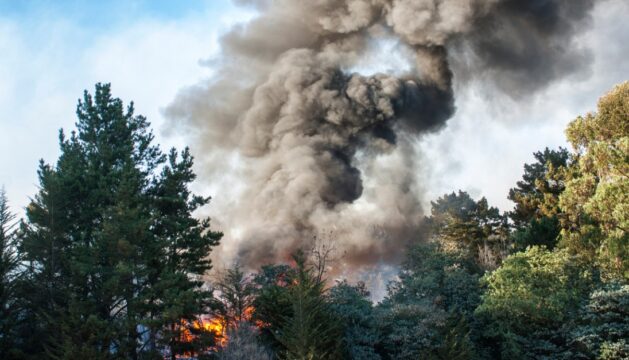
A wildfire near Benton City, Washington, burned approximately 1,149 acres after igniting on September 25, 2026, prompting Level 3 evacuation orders for nearby residents. Known as the Second Street Fire, the blaze threatened homes and forced residents to leave immediately. Authorities lifted evacuation orders by September 27, and incident records subsequently listed the fire as 100% contained.

The wildfire caused significant damage in the Benton City area. Investigators later linked the fire’s ignition to electrical arcing involving a high-voltage power line, although questions remained about the underlying equipment failure.

The immediate evacuation emergency has ended, but residents affected by the Benton City Fire may still be dealing with property damage, displacement, and recovery expenses. Understanding what happened, where to find assistance, and how to document wildfire losses can help affected households navigate the recovery process.

Get a Free Case Review
  • Pursue Wildfire Compensation
  • No Upfront or Hourly Costs
  • Find Wildfire Lawyers Near You
Get a Free Case Reviewlady justice statue

How Did the Benton City Fire Start?

The Second Street Fire in Benton City, WA, began on September 25, 2026, near Benton City, Washington. Strong winds helped the wildfire spread rapidly through grass, brush, and other vegetation, threatening nearby homes and infrastructure.

Here is a timeline of the major Benton City Fire developments:

  • September 25, just after 2:30 p.m.: The Second Street Fire started near Northeast Second Street and spread rapidly, prompting Level 3 evacuation orders, road closures, and a statewide mobilization of firefighting resources. By late afternoon, authorities estimated the fire had burned more than 1,100 acres.
  • September 26: Firefighters continued containment operations. By the evening, the fire was approximately 60% contained, and evacuation restrictions were reduced, allowing residents to begin returning home.
  • September 27: The fire reached approximately 95% containment, with an estimated 1,151 acres burned.
    September 28: All evacuation orders and road closures were lifted, and responsibility for monitoring the fire returned to local agencies.
  • October 12: The latest Benton City Fire update in federal incident records listed the blaze as 100% contained, with approximately 1,149 acres burned.
  • October 14: Local reporting indicated that Benton Public Utility District had identified electrical arcing from a high-voltage power line as the cause of the fire, following an investigation by the Benton County Sheriff’s Office.

While the evacuation emergency ended within days, the question of why the power line failed remains open. For residents affected by this Washington wildfire, that unanswered question may be central to understanding who is responsible for their losses.

How Contained Is the Benton City Fire?

The Second Street Fire reached 100% containment by October 12, 2026, according to incident data from the National Interagency Fire Center (NIFC). The final recorded fire size was approximately 1,149 acres.

Although 100% containment means firefighters have established control lines around the fire to prevent further spread, it does not necessarily mean every hot spot has been extinguished. Residents should follow Benton County emergency officials for any new safety advisories.

What Caused the Benton City Wildfire Level 3 Evacuations?

An investigation by the Benton County Sheriff’s Office later attributed the Benton City wildfire’s ignition to electrical arcing at the end of a Benton Public Utility District (PUD) high-voltage power line. Benton PUD reported evidence of a short circuit and mechanical failure involving the line.

As of its October 14 announcement, the utility was still investigating what caused its equipment to fail.

Evacuation Tips for Benton City Residents

During the Second Street Fire, Benton County emergency officials issued evacuation orders and established temporary shelters for residents forced to leave their homes. Although those evacuation orders have since been lifted, residents should remain prepared for future wildfire emergencies.

The Washington State Department of Health recommends having an evacuation plan, preparing emergency supplies, and following instructions from local authorities.

If another wildfire threatens the Benton City area, residents can take the following precautions:

  • Monitor official emergency alerts. Check Benton County Emergency Services for evacuation notices, road closures, and other safety information, as well as any notifications from the Benton City Fire Department.
  • Prepare important documents. Keep identification, insurance policies, medical records, and other essential documents together in a waterproof, portable container.
  • Pack an emergency supply kit. Include prescription medications, drinking water, nonperishable food, clothing, phone chargers, and essential personal supplies.
  • Plan for pets and family members. Arrange transportation and accommodations for children, older adults, people with disabilities, and pets or livestock.
  • Know your evacuation routes. Identify multiple ways to leave your neighborhood and follow routes recommended by emergency officials.
  • Leave immediately when ordered. A Level 3 evacuation means residents are in immediate danger. Do not delay departure to gather belongings or protect property.
  • Wait for official clearance before returning. Fire-damaged areas may contain hazardous debris, unstable structures, and other dangers even after flames are contained.

Residents can also review Fire Help Center’s wildfire preparedness guide for additional information about protecting their families and preparing for an evacuation.

Steps You Can Take After Wildfire Damage

Recovering from a wildfire can take weeks, months, or longer, particularly for residents whose homes or personal belongings were damaged or destroyed. Following the Second Street Fire, affected Benton City residents may need assistance with temporary housing, property cleanup, insurance claims, and other recovery expenses.

If your home or property was affected by the wildfire, consider taking these steps:

  1. Wait until authorities say it is safe to return. Wildfire-damaged properties may contain hazardous debris, unstable structures, and damaged electrical systems.
  2. Document all property damage. Take photographs and videos of your damaged buildings, vehicles, landscaping, and personal belongings before beginning cleanup, whenever it is safe to do so.
  3. Contact your insurance company. Report the damage promptly, review your coverage, and ask about temporary housing or additional living expense benefits.
  4. Keep receipts and financial records. Save documentation of hotel stays, meals, transportation, emergency supplies, repairs, and other expenses related to the wildfire.
  5. Create an inventory of damaged belongings. Record descriptions, approximate purchase dates, and estimated replacement costs. Include photographs or purchase records when available.
  6. Save copies of important communications. Save insurance correspondence, claim numbers, inspection reports, repair estimates, and notices from government agencies.
  7. Seek local recovery assistance. Contact the American Red Cross for information about disaster recovery services. Residents can also call 211 to ask about available housing, food, and community assistance programs.
  8. Consider your legal options. If a wildfire was caused by negligence, affected property owners may be able to work with a wildfire lawyer and pursue compensation for losses not fully covered by insurance.

Residents should avoid signing unfamiliar settlement agreements or authorizing extensive repairs without understanding how those decisions may affect their insurance claims or legal rights. Keep copies of all documentation related to the fire, even after initial repairs or cleanup are complete.

If your insurance company denies your claim, you may still have options to seek compensation. Get a free case review today to see if you can seek a wildfire settlement.

Get a Free Case Review
  • Pursue Wildfire Compensation
  • No Upfront or Hourly Costs
  • Find Wildfire Lawyers Near You
Get a Free Case Reviewlady justice statue

Get Support After the Benton City Wildfire Evacuations

The Second Street Fire burned about 1,149 acres near Benton City after igniting on September 25, 2026, forcing Level 3 evacuations and destroying multiple homes.

Investigators linked the fire to electrical arcing on a Benton PUD power line, but it’s still unclear whether negligence played a role. Residents who suffered losses may have legal options if evidence shows another party’s negligence caused or contributed to the fire.

Fire Help Center helps wildfire survivors explore their potential legal rights and understand options for pursuing compensation. Depending on the circumstances, recoverable losses may include property damage, temporary housing expenses, lost income, and other wildfire-related costs.

If you or your family suffered losses in the Second Street Fire, get your free case review or call us at (866) 866-0753 to learn more about your potential legal options.

Written by: Fire Help Center

Fire Help Center was founded to support individuals and families affected by wildfire-related loss and disaster. Our mission is to provide clear, reliable resources that help people navigate recovery, prevention, and preparedness strategies. We work to ensure no one has to face the aftermath of a wildfire alone.

Last modified:
  1. American Red Cross. (n.d.). Get help. Retrieved from: https://www.redcross.org/get-help.html.
  2. KIRO 7. (September 26, 2026). Second Street Fire 95% contained, all evacuations lifted. Retrieved from: https://www.kiro7.com/news/local/second-street-fire-triggers-level-three-evacuations-benton-county-1151-acres-affected/F4LPSSKXHNAXNOD3G7UOC35MWM/.
  3. NonStop Local. (October 14, 2026). Benton PUD: Second Street Fire caused by power line issue. Retrieved from: https://www.nbcrightnow.com/news/benton-pud-second-street-fire-caused-by-power-line-issue/article_8f2234fc-440a-4af9-acf4-41b65abfeef6.html.
  4. Ready.gov. (August 11, 2026). Wildfires. Retrieved from: https://www.ready.gov/wildfires.
  5. The Spokesman-Review. (October 18, 2026). Power line arcing led to Benton County Fire, utility says. Retrieved from: https://www.spokesman.com/stories/2026/oct/18/power-line-arcing-led-to-benton-county-fire-utilit/.
  6. U.S. Fire Administration. (June 24, 2026). Wildfire evacuation. Retrieved from: https://www.usfa.fema.gov/wui/outreach/wildfire-evacuation.html.
  7. Washington Emergency Management Division. (n.d.). Wildfire. Retrieved from: https://mil.wa.gov/wildfire.
  8. Washington State Department of Health. (n.d.). Wildfires. Retrieved from: https://doh.wa.gov/emergencies/be-prepared-be-safe/severe-weather-and-natural-disasters/wildfires.
  9. Washington State Patrol. (September 26, 2026). 09-25-2026 Second Street Fire media release. Retrieved from:https://www.forth.news/lists/wsp/CfR9RV3Hm54e8eX4D4DbK.
Get a Free Case Review